72% of Gen Z said they’d more readily make a purchase from brands they follow on social media.
Members of Generation Z, often called the generation of digital natives, were born after 1996, so the oldest of this group is now 25 years old. This generation, which can’t remember a time before the internet and widespread digital technology, now makes up just over 20 percent of the U.S. population. As they begin to enter the workforce, Gen Z’s views on employment, the environment, the economy, technology, social issues and politics will begin to reshape the United States.
We’ve compiled more than 70 statistics to learn about how Gen Z views finances, online shopping, employment and more for you to read in 2023.
Note: we reference the most updated data available, but sometimes that information is from several years ago—check each individual source for specifics.
Online shopping
Generation Z was raised on the internet and spends a significant amount of time using phones, tablets and other mobile devices to connect with friends as well as brands and influencers. They have high expectations for the appearance, functionality and security of the online stores they shop at. While Gen Z can be affected by the opinions of influencers, they also look to their peers for shopping ideas.
Data privacy and discounts are two motivating factors for Gen Z as they shop online. Also, this generation is keen for advancements in online shopping technology, and they are ready to embrace what comes.
Only 25 percent of Gen Z said they feel in control of their data online. [Source: Global Web Index]
60 percent of Gen Z would prefer to keep their data over exchanging it for free services in 2020. [Source: Global Web Index]
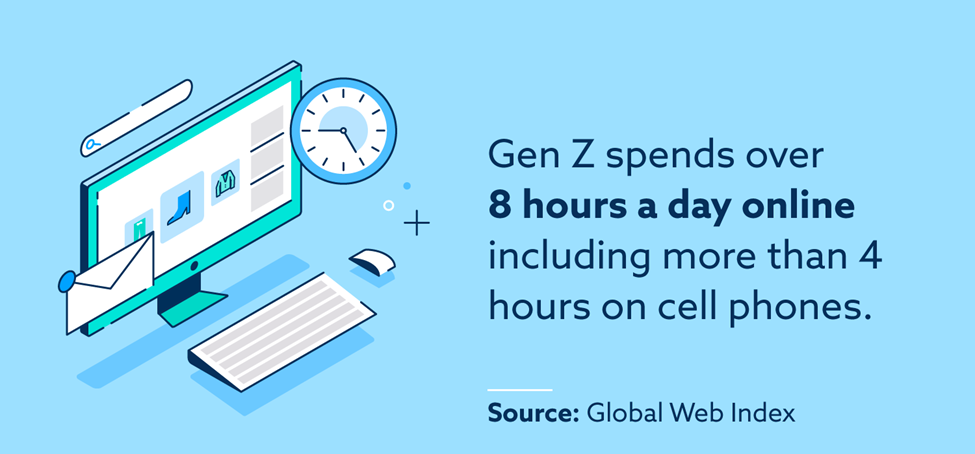
Gen Z reports spending around four and a half hoursper day on their mobile devices. [Source: Global Web Index]
Gen Z reports spending a little over three and a half hours per day on their laptops. [Source: Global Web Index]
Gen Z spends over eight hours a day online on average. [Source: Global Web Index]
28 percent of Gen Z consider a simple online checkout experience as a purchase driver. [Source: Global Web Index]
54 percent of Gen Z report free delivery as a major incentive to make an online purchase. [Source: Global Web Index]
43 percent of Gen Z cite coupons and discounts as important factors in making a purchase. [Source: Global Web Index]
A poor shopping experience prevented 31 percent of Gen Z from making a purchase online. [Source: Kearney]
Only 37 percent of Gen Z said they rely on large e-commerce sites like Amazon, compared to 67 percent of older generations who do so. [Source: CGS]
82 percent of Gen Z said that peer reviews were extremely important to them when shopping online. [Source: Kearney]
77 percent of Gen Z said that personalized recommendations were extremely important to them when shopping online. [Source: Kearney]
62 percent of Gen Z report being worried about how companies use their personal data. [Source: Global Web Index]
Affordability is an important factor in purchasing decisions for 62 percent of Gen Z, compared to 53 percent of the general population. [Source: SurveyMonkey]
32 percent of Gen Z looks to brand authenticity as a motivator for making a purchase. [Source: SurveyMonkey]
15 percent of Gen Z are using secondhand sites like eBay to purchase nonessential items, compared to just 3 percent of baby boomers. [Source: CGS]
Gen Z is not just motivated by cost, but also by quality (27 percent) and influencer recommendations (21 percent). [Source: CGS]
Along with millennials, Gen Z is willing to try new technology for online purchases, including livestream shopping (40 percent) and trying on clothes with augmented reality (24 percent). [Source: CGS]
Brick-and-mortar shopping
Although they are very comfortable shopping online, many Gen Zers continue to make in-store purchases for a variety of reasons. Retailers looking to appeal to Gen Z will need to promote brand loyalty, offer incentives and discounts and upgrade their retail technology to make it easier for technologically savvy young people to find what they’re looking for.
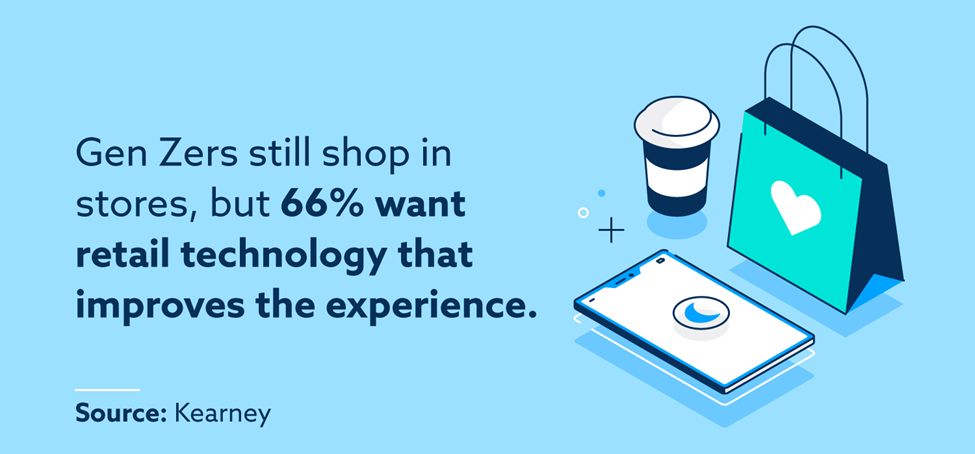
Despite their status as digital natives, 81 percent of Gen Z said they still like shopping in-store. [Source: Kearney]
74 percent of Gen Z cited a “well-curated store experience focused on a limited number of products” as either extremely or moderately important to them. [Source: Kearney]
As a way to discover new products, 73 percent of Gen Z said they shop in physical stores. [Source: Kearney]
65 percent of Gen Z said they preferred shopping at brick-and-mortar stores to try out purchases. [Source: Kearney]
For holiday shopping, 55 percent of Gen Z said they plan to visit brick-and-mortar stores. [Source: Retail Dive]
79 percent of Gen Z believe that security is important in a brick-and-mortar environment. [Source: Kearney]
86 percent of Gen Z said they’re after special promotions, like free samples and giveaways, in the brick-and-mortar stores they visit. [Source: Kearney]
A poor shopping experience prevented 32 percent of Gen Z from making a purchase in-store. [Source: Kearney]
66 percent of Gen Z said they’d be inclined to shop at physical stores offering technology that enhanced their shopping experience. [Source: Kearney]
72 percent of Gen Z wants retail technology that lessens the time they spend waiting in line. [Source: Kearney]
To streamline the process of finding products in stores, 61 percent of Gen Z would like new retail technology. [Source: Kearney]
Looking for ways to decompress, 58 percent of Gen Z said they use shopping in-store as a way to disconnect from social media. [Source: Kearney]
Brand perception
Members of Generation Z expect brands to be transparent, ethical and socially responsible. This generation also tends to care more about the quality of their purchases than brand loyalty. Social media influencers have an outsized effect on Gen Z’s perception of various brands, and many Gen Z purchases result from social media engagement.
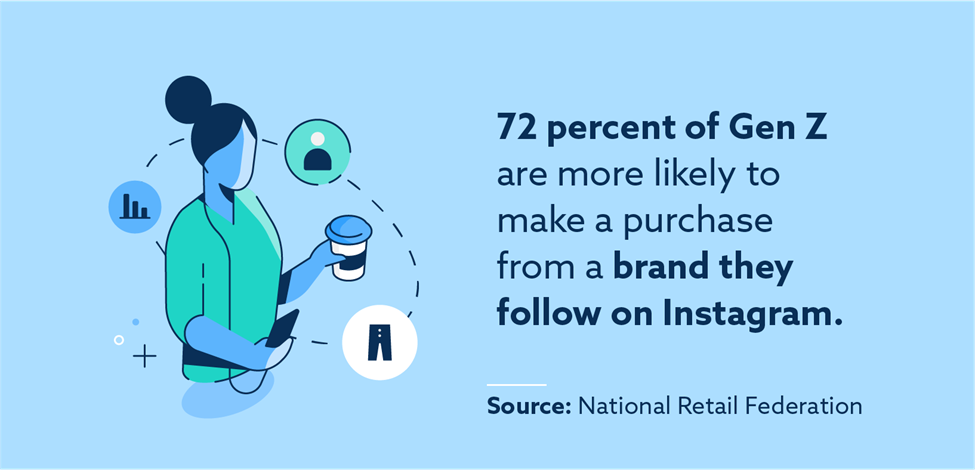
72 percent of Gen Z said they’d more readily make a purchase from brands they follow on social media. [Source: National Retail Federation]
On Instagram, 47 percent of Gen Zers who follow brands have purchased something directly through the platform. [Source: National Retail Federation]
23 percent of Gen Z report following social media accounts or brands they are considering purchasing from. [Source: Global Web Index]
Gen Z is 22 percent more likely than other generations to unfollow a brand online. [Source: Global Web Index]
Only 15 percent of Gen Z feel represented in the brand advertisements they see. [Source: Global Web Index]
56 percent of Gen Z believe brands should be innovative. [Source: Global Web Index]
Looking to see themselves in brands, 38 percent of Gen Z believe brands should be young. [Source: Global Web Index]
42 percent of Gen Z believe brands should be trendy or cool. [Source: Global Web Index]
40 percent of Gen Z believe brands should make them feel valued. [Source: Global Web Index]
Searching for a more tailored experience, 35 percent of Gen Z believe brands should offer customized products that are personalized to their needs. [Source: Global Web Index]
33 percent of Gen Z believe brands should support charities. [Source: Global Web Index]
In an effort to go greener, 58 percent of Gen Z prefer their purchases to come in eco-friendly packaging. [Source: Kearney]
60 percent of Gen Z said that endorsements on social media from non-celebrities were extremely or moderately important to them when shopping online. [Source: Kearney]
51 percent of Gen Z said that endorsements on social media from celebrities were extremely or moderately important to them when shopping online. [Source: Kearney]
83 percent of Gen Z said no matter what level of trust they hold for a brand, they still do their research before making a purchase. [Source: IBM]
Environmental sustainability in their purchases is important to 57 percent of Gen Z. [Source: Kearney]
50 percent of Gen Z said they’re looking for locally sourced products. [Source: Kearney]
75 percent of Gen Z cited sustainability as important to them when choosing what to buy. [Source: IBM]
Finances and employment
Many more members of Gen Z are entering the workforce, and within the next decade, this group is expected to make up 30 percent of all U.S. workers. Though they currently have a relatively modest influence on the overall economy, Gen Z now has an estimated spending power of over $300 billion—and growing each year.
Gen Z has significantly different views on employment, and many of them value a meaningful job with flexibility and opportunities for growth more than previous generations.
Gen Z teens have an average of $115 in spending money each month. [Source: YPulse]
By 2030, Gen Z is estimated to make up 30 percent of the U.S. workforce. [Source: Zenefits]
Gen Z has an estimated spending power of $323 billion. [Source:

-1.jpg?width=339&height=588&name=credit-cards-hero%20(1)-1.jpg)