
How many credit cards should I have?
October 13, 2025

The information provided on this website does not, and is not intended to, act as legal, financial or credit advice. See Lexington Law’s editorial disclosure for more information.
An FTC study found that millions of Americans have errors or unfair negative items on at least one of their three credit reports—errors that may wrongfully hurt their credit. Most of the time, it’s up to you to alert the credit bureaus of these errors.
Although “credit lawyer” is not a recognized specialty in legal practice, we define a credit lawyer as a licensed attorney who is knowledgeable in credit-related laws and works on your behalf to help you repair your credit. Credit lawyers can complete the credit repair process in more efficiently and with fewer mistakes than if you attempted to fix it yourself. Their knowledge of credit-related laws and experience dealing with the credit bureaus, debt collectors and other entities are great qualities to have in your corner.
We put together this guide to outline everything you need to know before considering a credit lawyer.
We define a credit lawyer as a person knowledgeable in credit-related laws who works on your behalf to repair your credit.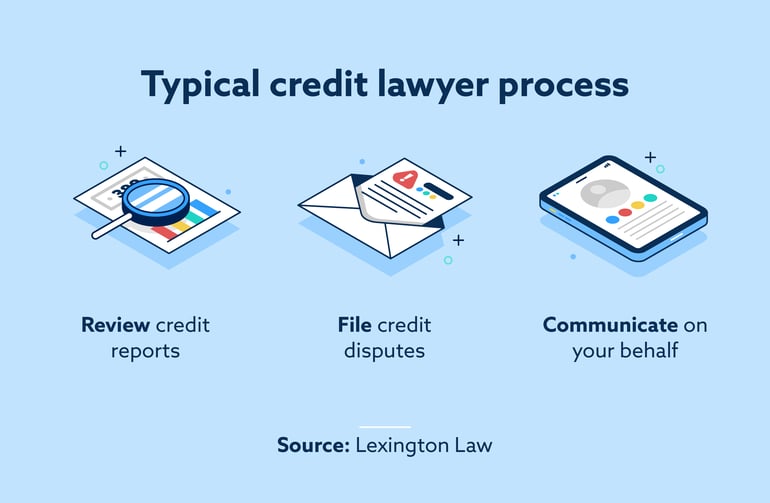
Here’s a snapshot of some of the ways credit lawyers can help you:
They’ll usually start by reviewing your credit reports and history to find any errors or misreported information. Then, a credit lawyer will gather the appropriate documentation and contact the relevant entities to verify or challenge the reported information. Ideally, if the information is not corrected in accordance with the law, the credit lawyer will request a correction or removal of the misreported information.
Other steps a credit lawyer takes depend on your situation. The credit bureaus may remove the error if they believe the evidence provided is sufficient, or you may need to engage a few more times with the bureaus to make your case.
The relevant credit-related laws are the Fair Credit Reporting Act, the Fair Credit Billing Act, the Fair Debt Collection Practices Act and the Credit Repair Organizations Act.
Many of these laws were put in place to protect consumers and ensure they’re treated fairly. You can learn more about a few of these laws below.
Fees may vary depending on your particular situation, including the number of inaccuracies you have on your credit reports, what services the lawyer executes and many other factors.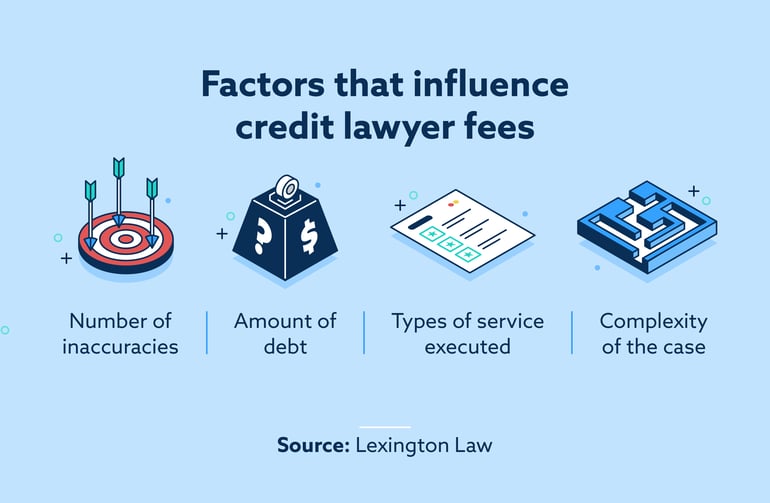
At Lexington Law Firm, our credit repair services cost $139.95 per month, you can cancel services at any time and our monitoring services are available for $24.95 per month. You can take a look at our costs FAQ page to learn more about our credit repair service and what it includes.
When working with a credit lawyer, you should carefully read their contract to understand how much you’re paying and what services they’ll execute for you. You should also walk away if they demand payment up front before any work has begun, excluding, of course, any fees associated with pulling your initial credit reports. Any company or individual that does this is potentially in violation of the Credit Repair Organizations Act (CROA).
You can seek help from nonprofit organizations if you’re unable to afford a credit lawyer. Many nonprofits offer services like credit counseling, budgeting workshops and other financial resources. They may have volunteer lawyers available to help as well.
Nonprofits are sometimes limited based on their budget and availability of staff and volunteers, so you should ask about their process if you’re interested in taking this route.
Even if you’re planning to work with a nonprofit, you should still look at their reviews and do some research to ensure you’re working with a legitimate organization.
You can avoid scams with credit lawyers by doing your research, knowing what questions to ask and becoming familiar with your legal rights.
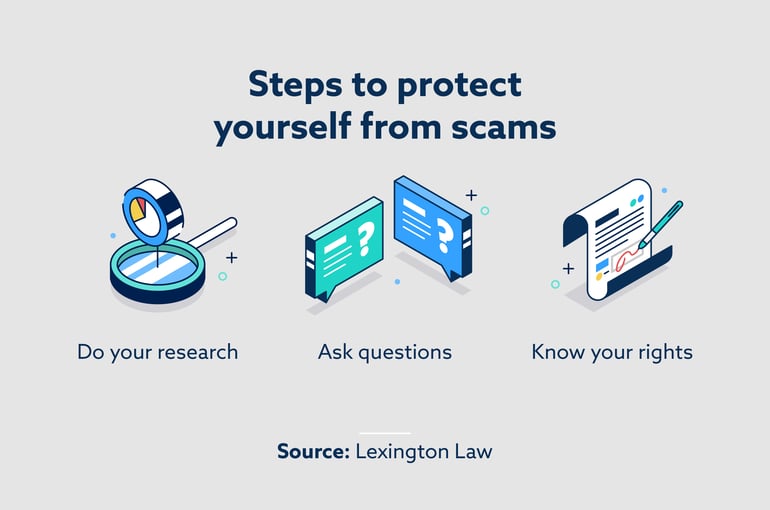
Just like any service, you should check out the lawyer’s reviews and testimonials to see what you can expect when working with them. You can also check their records with their state bar association.
Next, come prepared with a list of questions and a mental note of warning signs when first consulting with each lawyer. Some questions include:
You should also watch for the following red flags:
Finally, you should get familiar with the basics of some of the laws we mentioned earlier in the post. That way, you can quickly determine if the lawyer has the right experience and is knowledgeable enough to help you.
No, you don’t need a lawyer to fix your credit. You can do anything a credit lawyer can do, but your best option will depend on a variety of things.
Credit lawyers likely have experience with many aspects you may not have the time to learn about or handle yourself. These include:
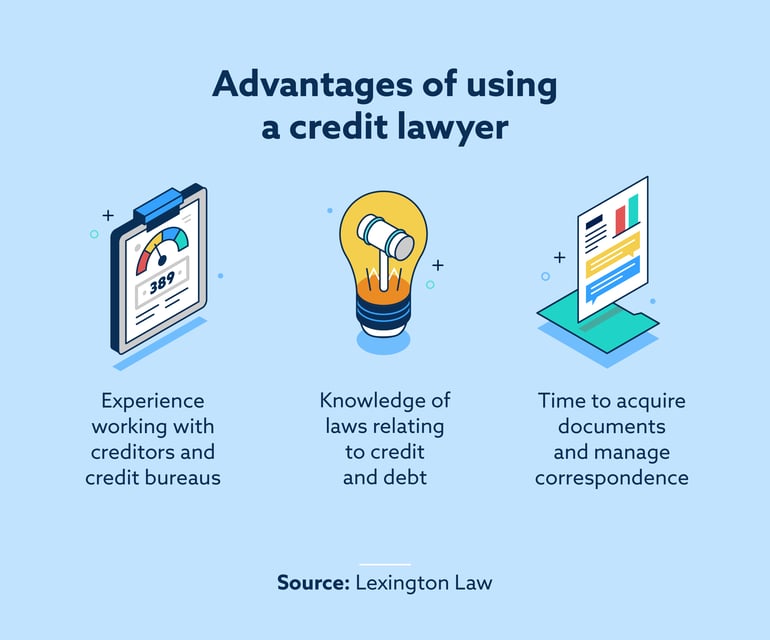
Unless you can dedicate the time needed to learn and diligently work through everything, you might put yourself at risk of missing crucial details or otherwise making a costly mistake. For example, a credit bureau can deny your dispute if you don’t provide correct or sufficient documentation.
This can cost you time and money if you’re unable to resolve it. However, the best choice for you depends on your personal preferences, how much time and money you’re able to dedicate and the complexity of your situation.
The lawyers at Lexington Law have years of experience working on credit-related cases. Contact us to learn more about our credit repair services and how our team can help you make informed decisions about repairing your credit.