

What is a goodwill letter? + template
August 01, 2025

The information provided on this website does not, and is not intended to, act as legal, financial or credit advice. See Lexington Law’s editorial disclosure for more information.
Bankruptcy can be an important part of getting out of debt for many people, but the process is not without consequences. A successfully discharged bankruptcy will free you from your debts, but it will leave your credit report with a negative item that lasts many years.
Unfortunately, bankruptcy generally has a severe negative effect on your credit score regardless of your previous credit history. That score drop, which could be anywhere from 100 to 240 points or more, can be overcome, but creditors continue to see the bankruptcy notation on your credit report until it leaves after a set period of time.
There are only two ways to get a bankruptcy removed from your credit report: file a dispute with the credit bureaus or wait for the bankruptcy to leave the report after seven to 10 years. A legitimate bankruptcy cannot be disputed, so you’ll need to wait for it to leave the report unless you can prove that some aspect of the bankruptcy is listed incorrectly in your credit report.
Read on for more details about how to dispute a bankruptcy, how long a bankruptcy will stay on your credit report and how to rebuild your credit after bankruptcy.
A legitimate bankruptcy cannot be disputed, but a bankruptcy can come off your credit report if it is inaccurately entered or otherwise incorrect.
The Fair Credit Reporting Act (FCRA) governs the companies that report information about your credit history, and it provides the legal right for anyone to dispute inaccuracies they find in their credit report.
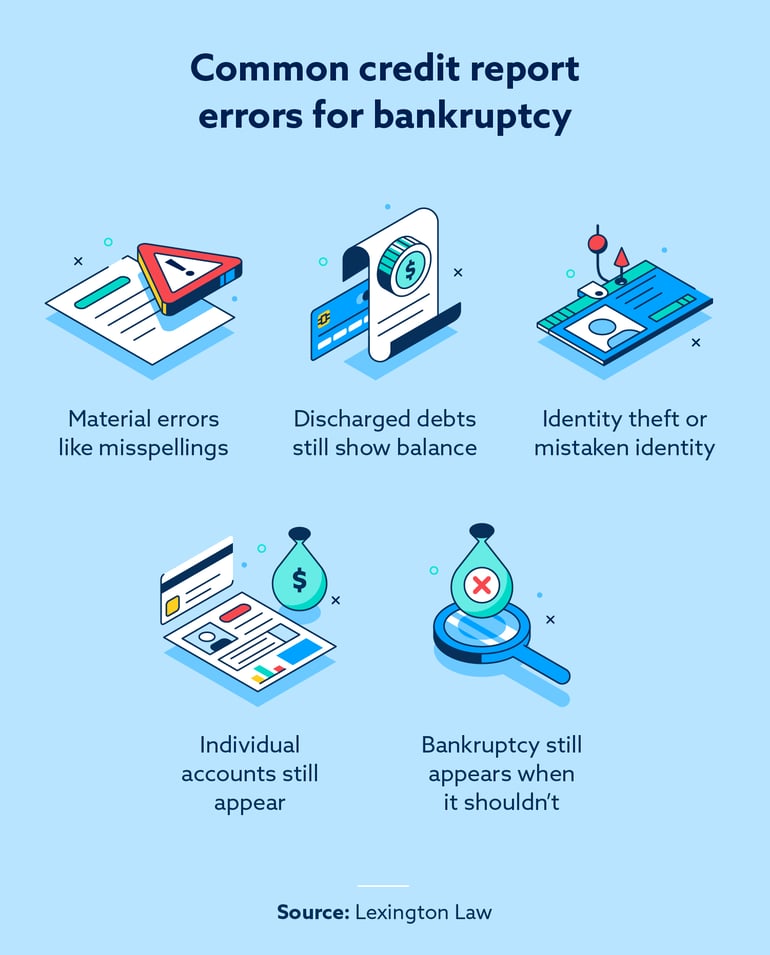
In the case of bankruptcies—especially because they remain on the credit report for so many years—it’s not uncommon for errors to creep in. Here are some of the most common errors:
If any of these or other errors appear on your credit report, you have the right to challenge those errors. The reporting agency must remove them if the reporting agency cannot substantiate the item. You can follow the standard credit dispute process to provide evidence and have the inaccurate information removed.
Because the process of filing a dispute can be complex and time-consuming, many people choose to work with a credit repair company that can manage the dispute on their behalf.
On the other hand, if information on your credit report related to bankruptcy is found to be accurate, you’ll need to wait for the bankruptcy to leave your report on its own.
A Chapter 7 bankruptcy can remain on your credit report for up to 10 years, while a Chapter 13 bankruptcy can stay on your report for up to seven years.
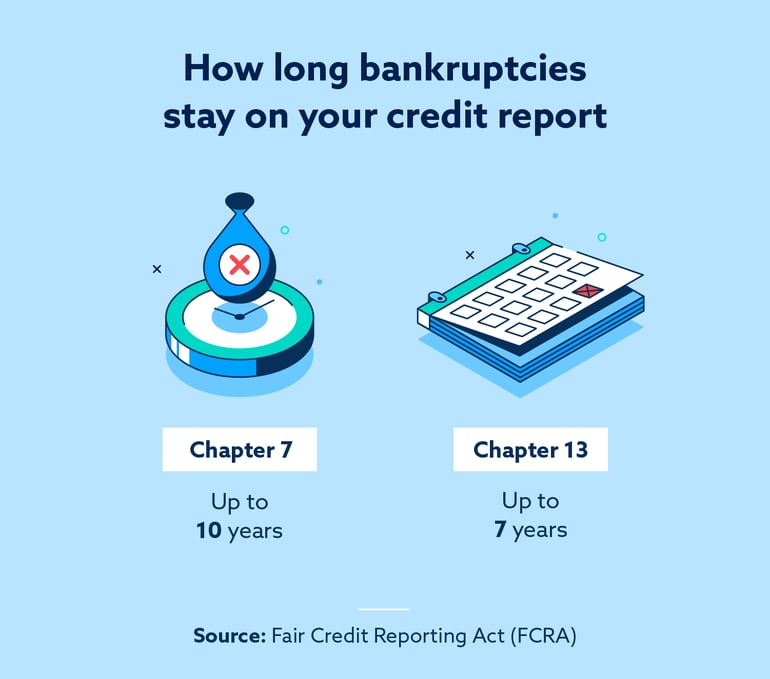
The FCRA lays out the longest that a bankruptcy can remain on your credit report. This means a bankruptcy can be removed earlier than the legal maximum, but it must be proven that it is misreported, unsubstantiated or otherwise found inaccurate. Unfortunately, a bankruptcy cannot be removed simply because it is damaging your credit score.
When you originally filed for bankruptcy, a means test determined whether you qualified for Chapter 7 or Chapter 13 bankruptcy.
Because Chapter 7 bankruptcy involves elimination of debt without payment, the requirements are more stringent and the bankruptcy remains on your report for a longer period of time—up to 10 years. On the other hand, Chapter 13 bankruptcy involves consolidation and partial repayment, so the requirements are less strict and the bankruptcy stays on your report for just seven years.
Even with a bankruptcy still on your credit report, it’s possible to begin rebuilding your credit—that way you’ll be in great shape by the time the bankruptcy falls off your report.
Rebuilding credit after declaring bankruptcy is difficult, but with patience and perseverance it is possible.
Many lenders who see a bankruptcy on your report will be unlikely to offer you new lines of credit like a loan or credit card, so you’ll need to take alternative approaches to rebuilding your credit history.
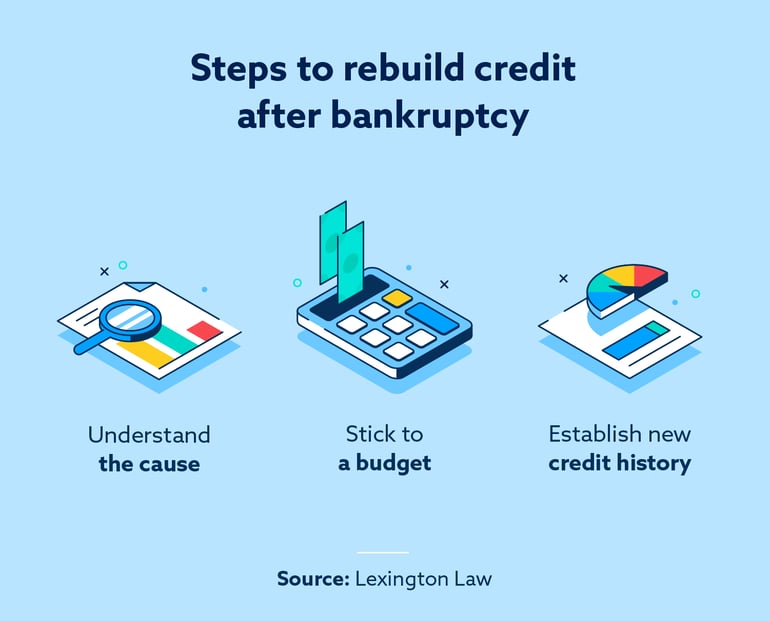
Here are some options for starting to rebuild your credit—even if you have a bankruptcy on your credit report.
Removing bankruptcy from your credit report can be a complicated process. Here are some answers to common questions that will help you get started.
You can dispute a bankruptcy on your credit report for free online, by phone or via letter.
If you need help with the dispute process, you could hire a credit repair company to handle the dispute with you. Pricing may vary depending on the company you decide to partner with.
The biggest difference between Chapter 7 and Chapter 13 bankruptcy is that Chapter 7 involves selling some of your nonessential assets to settle debt, while Chapter 13 gives you the opportunity to repay secured debt, like your car or house. The type of bankruptcy you file will largely depend on your income and eligibility.
A Chapter 7 bankruptcy route is typically taken if you’re unable to make regular payments to pay back your debt. Following this type of bankruptcy, most or all of your debt will be discharged.
On the other hand, a Chapter 13 bankruptcy, referred to as a reorganization bankruptcy, involves a three- to five-year repayment plan. Following the completion of the bankruptcy plan, remaining debt may be discharged.
As discussed above, a Chapter 7 bankruptcy should drop off of your credit report after 10 years, while a Chapter 13 bankruptcy should drop off after seven years.
A bankruptcy can initially feel devastating, but it also represents a new opportunity to start a new journey with credit. While it’s not possible to remove a legitimate bankruptcy from your credit report, its impact wanes over time until it finally leaves your report after seven to 10 years.
In the meantime, you can file a dispute with the credit bureaus if your bankruptcy contains any inaccurate information. Even with a bankruptcy on your report, you can start taking on new credit with the aim to pay on time and in full each month—the credit behaviors that are likely to lead to a high score in the future.

-2.jpg?width=339&height=588&name=credit-disputes-hero%20(3)-2.jpg)