APR vs. interest rate: key differences
June 03, 2025

The information provided on this website does not, and is not intended to, act as legal, financial or credit advice. See Lexington Law’s editorial disclosure for more information.
There are six main types of personal loans. It’s helpful to know the differences so you can understand which is right for you and your unique financial situation.
| 6 types of personal loans | |
| Unsecured personal loans | Repaid in monthly installments and don't require collateral |
| Secured personal loans | Backed by collateral until the loan is paid in full |
| Variable interest loans | Interest rates may fluctuate as the market changes |
| Fixed-rate loans | Interest rate remains the same over time |
| Personal lines of credit | Unsecured, revolving credit |
| Debt consolidation loans | Merge all of your debts into one loan |
Unsecured personal loans are installment loans. This means you’ll borrow an amount of money and repay it in fixed monthly payments, with interest, until it’s paid off.
Unlike other types of installment loans such as auto and home loans, unsecured personal loans don’t use the item you’re purchasing as collateral.
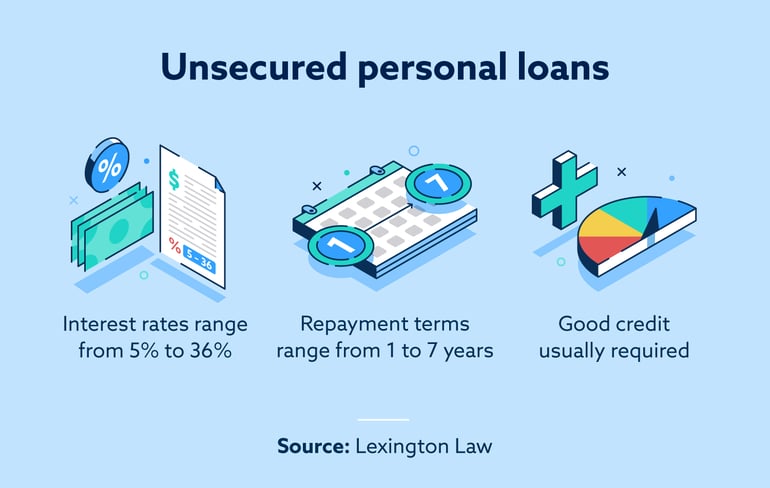
Instead, lenders give these based on your creditworthiness. Lenders will look at your credit score, income and debt-to-income ratio to determine if you qualify.
Pros
Cons
Secured personal loans give lenders ownership toward an asset. This makes it collateral, meaning if you don’t repay the loan in time, the lender can collect the asset to make up for unpaid funds.
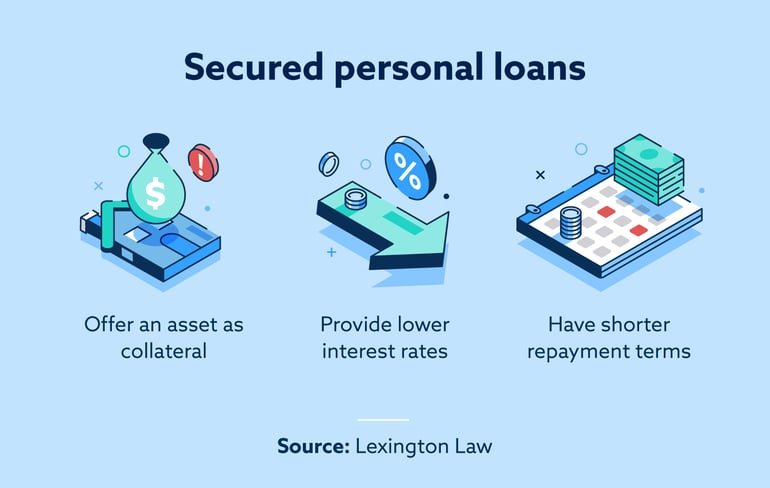
Because lenders can seize collateral in exchange, there’s less risk for them. This makes secured loans easier to qualify for, even if you don’t have good credit. Secured loans can be costly for borrowers because of this.
Pros
Cons
With a variable interest loan, your interest rate may change as market interest rates change. This will affect your monthly payments, given they’re mixed with principal and interest.
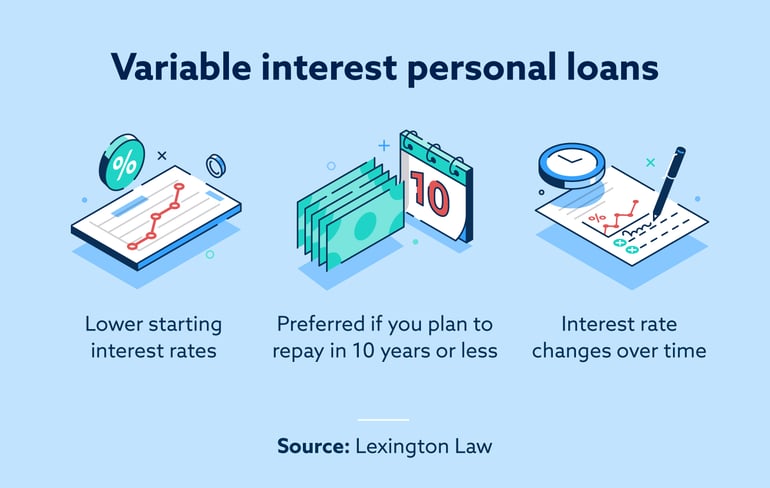
Some lenders give variable interest loans with a line of credit. This means the lender will approve you to borrow up to a certain amount.
Pros
Cons
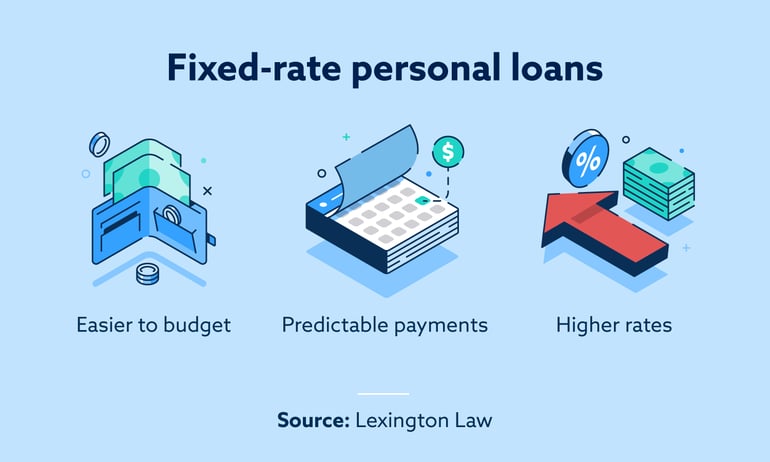
The majority of personal loans are offered with fixed rates, so the interest rate and payment will remain steady over time. This works best if you like to budget with consistent payments each month. With a fixed-rate loan, your payment will not change over time.
Pros
Cons
Lenders offer lines of credit, secured or unsecured, to borrowers that have met the credit requirements. It’s typically revolving credit, meaning it doesn’t have a fixed number of payments.
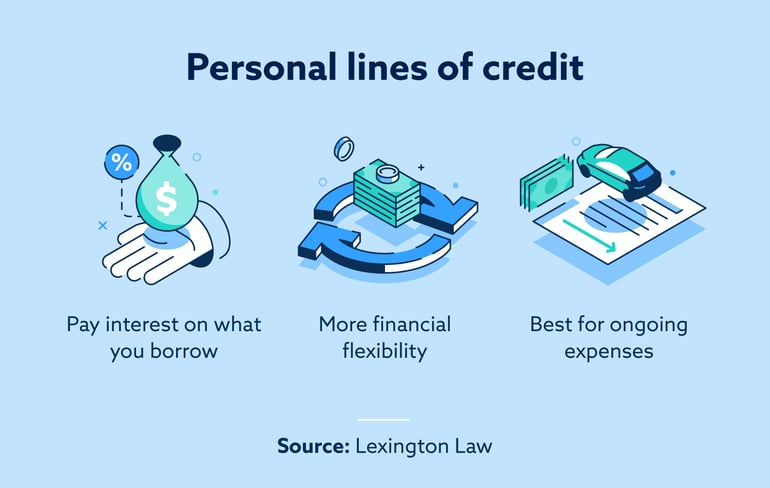
As a general rule, do not use a personal line of credit for expenses that you need to pay off over a longer term. Similar to a credit card, you pay interest only on what you borrow. If you happen to meet the requirements set by the institution, you may not have to offer collateral.
Pros
Cons
A big reason many people take out a personal loan to begin with is to consolidate debt. This can include credit card bills, other loans or miscellaneous bills and medical expenses.
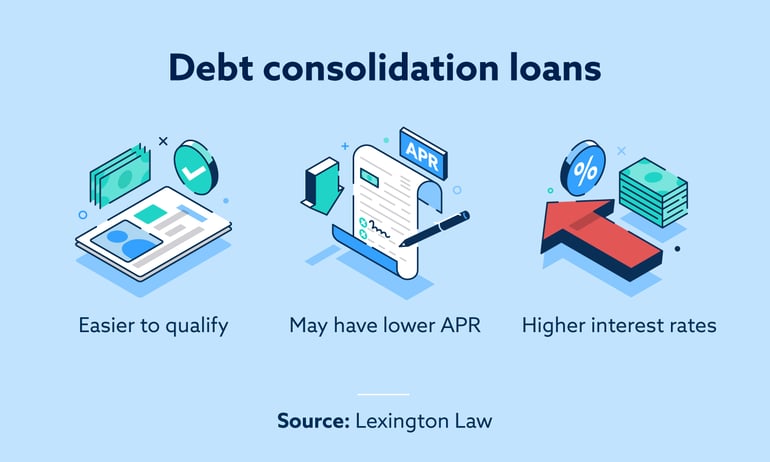
With a debt consolidation loan, you roll all of your debts into one loan and make one payment with one interest rate. These loans are easier to qualify for and have higher interest rates. You can also save on interest if your new loan has a lower APR than your existing loans.
Pros
Cons
To begin the application process, make sure you have proof of income and check your credit. Understanding where your credit is at can help you determine whether or not you’re likely to get approved for a loan. It can also give you an idea of what your interest rate will look like.
Even if you have bad credit, you may still be able to get a personal loan. You may have to get a cosigner. You also have to understand that your interest rate will be higher and that your lender of choice may not work with you, so you may have to go with someone else.
Once you have the information you think you need and are comfortable with your credit, it’s time to find a lender.
Personal loans can be used for just about anything, but some of the big reasons include:
In some situations, you can even use a personal loan to improve your credit. This is a good option if you have accumulated a good amount of credit card debt and don’t think you can manage repayment on your own, in a reasonable amount of time.
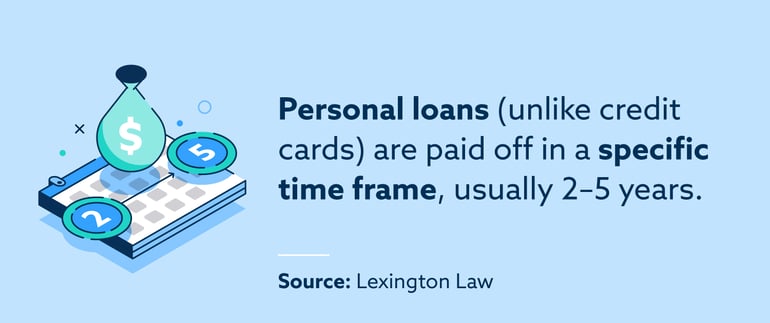
Personal loans differ from credit cards because:
Depending on your credit score, your interest rate will vary. As of the end of 2024, Experian® is reporting that the average interest rate for a personal loan is 12.32%. If you decide to apply for a personal loan, you’ll want to make sure your credit is in as good of shape as possible so that you get a lower interest rate.
You will benefit from understanding the types of personal loans available to you and their requirements before applying for any personal loan. We would also recommend taking steps like completing Lexington Law Firm's free credit assessment to get a better understanding of where your credit is at.