-1.jpg?width=339&height=588&name=credit-cards-hero%20(1)-1.jpg)
Credit cards for bad credit: what you need to know before applying
May 27, 2025


The information provided on this website does not, and is not intended to, act as legal, financial or credit advice. See Lexington Law’s editorial disclosure for more information.
Credit card security codes are an important security measure that help prevent fraud and identity theft. They add an additional layer of safety when making purchases and help ensure the buyer is, in fact, the cardholder.
These security codes—often called a CVV, short for “card verification value”—are three- or four-digit codes located directly on your credit card. You’ll likely be asked for your CVV when making card-not-present transactions, such as those made online and over the phone.
Below, we detail where to find credit card security codes, how they work and why they’re important for consumer protection.
Table of contents
The location of your CVV depends on the credit card issuer. Your code will either be on the front of your card above your card number or on the back of your card to the right of your card number.
| Issuer | Security code length | Where to find the code |
|---|---|---|
| American Express | 4 digits | Front of the card |
| Visa | 3 digits | Back of the card |
| Mastercard | 3 digits | Back of the card |
| Discover | 3 digits | Back of the card |
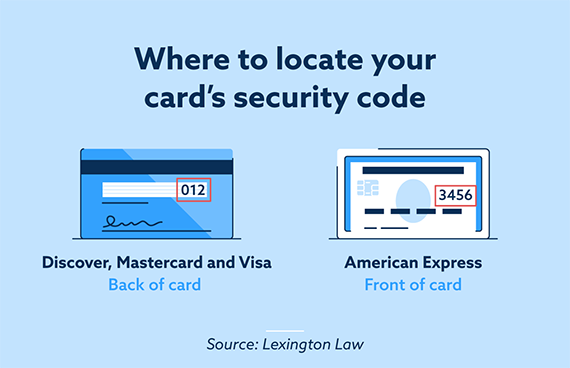
Credit card security codes were designed to ensure that the person making a purchase actually has the card in their possession. Because of this, you must be in possession of your credit or debit card in order to find the security code.
You won’t be able to find your card’s security code on bank statements or your online banking information. If you can’t find your card and need to use the security code for a purchase, contact your bank. They will typically issue a new card right away.
Depending on the credit card company and when your card was issued, your security code may go by a different name. Even though there are many different abbreviations, the basic concept remains the same.
Below are relevant abbreviations and meanings for credit card security codes.
| Abbreviation | Abbreviation meaning | Used by |
|---|---|---|
| CID | Card identification number | Discover and American Express |
| CSC | Card security code | American Express |
| CVC | Card verification code | Mastercard |
| CVC2 | Card verification code 2 | Visa |
| CVD | Card verification data | Discover |
| CVV | Card verification value | All |
| CVV2 | Card verficiation value 2 | Visa |
The payment card industry sets standards for merchants that help protect consumers, including the introduction of card security codes that work to prevent credit card fraud.
Due to the Payment Card Industry Data Security Standard (also known as the PCI DSS), merchants are able to store some card information, including your card number, your name and card expiration date. They are not able to store your card security code.
Even if an imposter retrieves your stored card number from an online merchant you’ve shopped with, it’s much harder for them to use your card without the security code. This is also why you’re still required to enter your CVV at checkout if you opt for a store to save your card data in their system.
Most online and over-the-phone transactions will require you to share your CVV.Check to make sure a merchant’s website is legit by looking for “https://” in the URL. The “s” stands for secure, and shows that the site is SSL certified and that it encrypts sensitive data.
If you’re making a purchase over the phone, be sure you trust the business or person you’re speaking with. If you’ve never shopped with the merchant before, you can do a quick scan of their reviews on a site like the Better Business Bureau to see if other shoppers have had recent complaints.
While making online or over-the-phone purchases can be a risk, remember that many credit card companies offer fraud liability protection. This means that if an imposter uses your card, you’re not required to pay for those transactions.
While CVVs offer another layer of security to help protect users, there are still some things to be aware of when making card-not-present transactions.
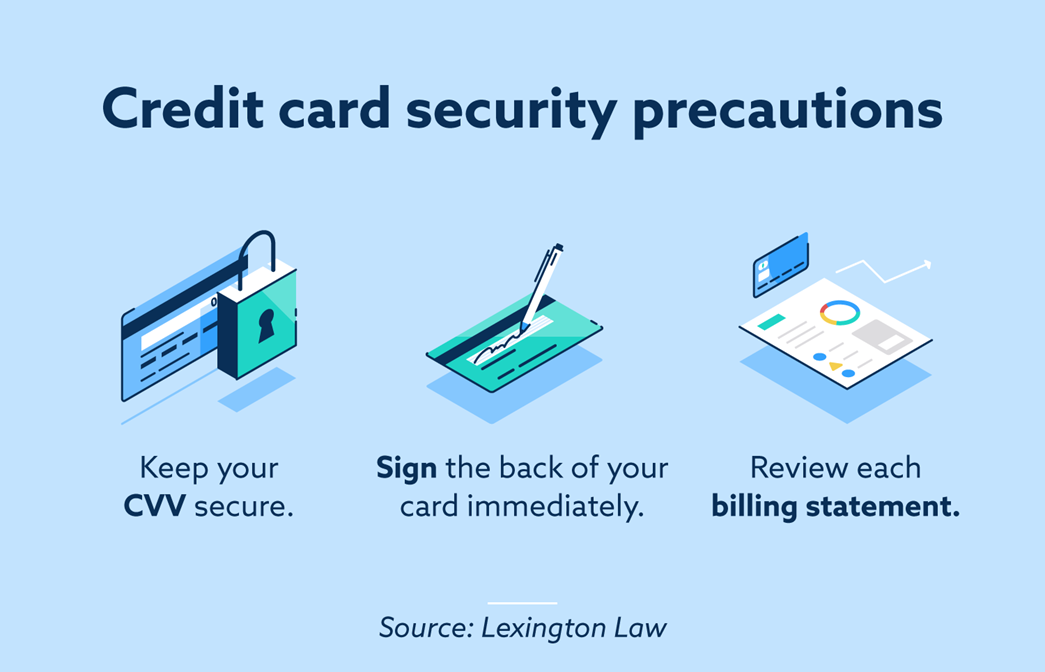
While CVVs offer a helpful layer of debit and credit card security, there is still a chance that you could fall victim to identity theft when using your card online. If you suspect someone has stolen your identity, call your credit card company, change your passwords and notify any credit bureaus and law enforcement agencies.
By regularly checking your credit card statements, being careful about who you give your information to and being vigilant when making purchases, you’ll help do your part in keeping your identity secure.
If you’ve become a victim of identity theft, Lexington Law Firm can help you work to repair your credit through our credit repair services. We also offer credit monitoring services that alert you whenever there’s a change to your report. This means that together, we can act quickly to address incorrect items.
Note: Articles have only been reviewed by the indicated attorney, not written by them. The information provided on this website does not, and is not intended to, act as legal, financial or credit advice; instead, it is for general informational purposes only. Use of, and access to, this website or any of the links or resources contained within the site do not create an attorney-client or fiduciary relationship between the reader, user, or browser and website owner, authors, reviewers, contributors, contributing firms, or their respective agents or employers.