
How to Use Your Tax Refund to Build Better Credit
February 27, 2026

The information provided on this website does not, and is not intended to, act as legal, financial or credit advice. See Lexington Law’s editorial disclosure for more information.
Whether you like or dislike big banks, knowing there are other options available can be helpful. Credit unions may just be the alternative that you’re searching for.
Here, we’ve outlined what a credit union is, how credit unions work, how they differ from big banks and how using one can help your credit. By the end of this article, you may know whether a credit union or a bank is best suited to your financial needs.
A credit union is a nonprofit financial institution that’s similar to a bank but owned and operated by its members. This means the credit union prioritizes members’ interests over profits. The members create a pool of money to provide loans and mortgages. As a result, one member’s savings essentially become another member’s loan.
Because credit unions are nonprofit organizations, their business motivations aren’t driven by incentives to charge customers more. Additionally, due to their not-for-profit setup, credit unions are also tax-exempt.
The primary difference between banks and credit unions is the company’s ownership. Shareholders own banks, and increasing profits is usually their primary incentive. Credit unions are owned by their members, so the members have a say in leadership. As owners, all members can vote on a volunteer board of directors.
Banks and credit unions offer similar services, so you can open checking and savings accounts and apply for loans and credit cards at both. However, because members are the owners of credit unions, your local credit union may also provide you with a more personalized service experience.
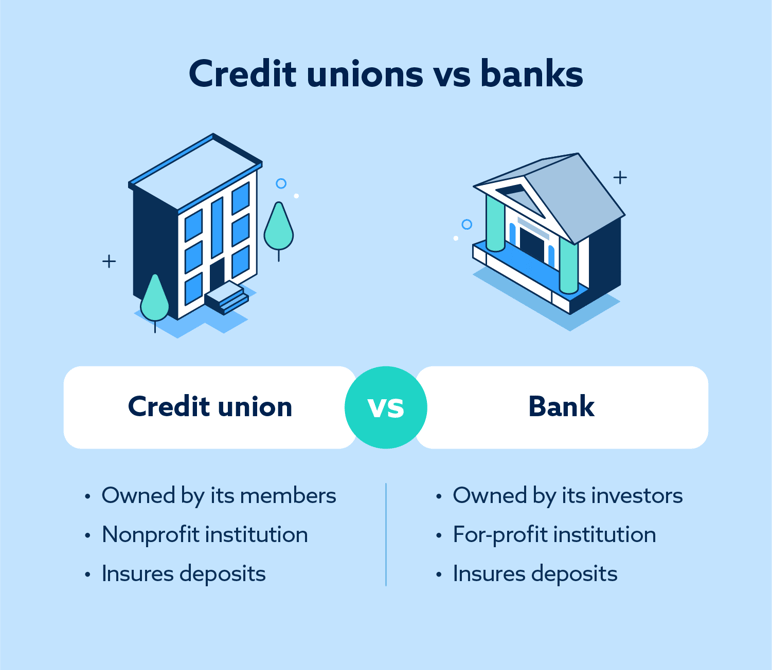
Some people hesitate to use credit unions because they think there’s a bigger risk of them shutting down. It’s common to have concerns about what will happen should your financial institution fail, but rest assured that both banks and credit unions have insurance that will protect your money. Just as banks have the Federal Deposit Insurance Corporation (FDIC) offering up to $250,000 of insurance per depositor per institution, credit unions have a similar safety net.
The National Credit Union Administration (NCUA) insures members’ accounts up to $250,000 per member per insured credit union for each ownership category. That means you’re covered if you have less than $250,000 at a credit union. If you have more than that, you may still be covered depending on how your accounts are organized. You can use the NCUA’s Share Insurance Estimator for information that applies to you specifically.
Both types of insurance are backed by the full faith and credit of the U.S. Government. This means that if funds available to the FDIC or NCUA get wiped out, the government agrees to cover the amount owed to you.
Credit unions feel more like communities because of their members’ shared interests. This is especially beneficial for small businesses and individuals who want to have a say in how their financial institution is run.
There are many benefits to credit unions, including:
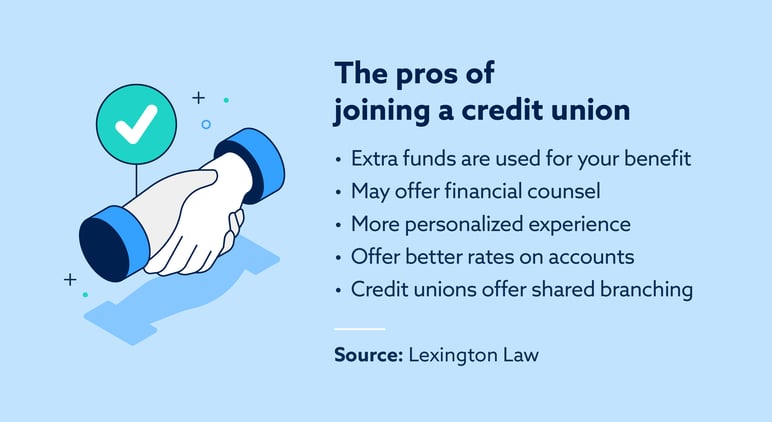
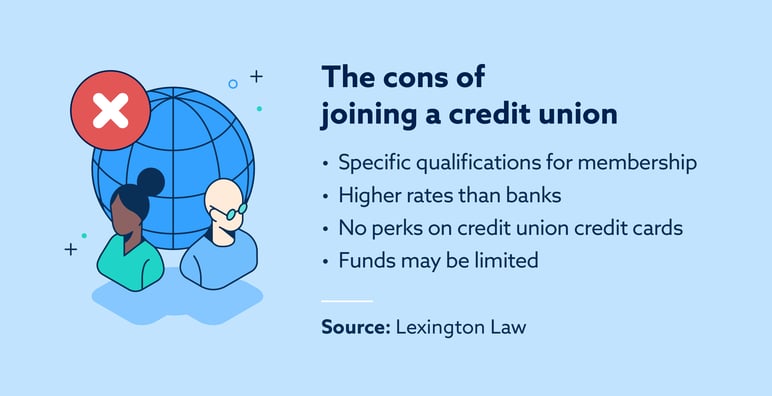
While credit unions have many positives, there are also some drawbacks any potential member should be aware of:
Credit unions are often willing to work with those with poor credit, offering financial products and training to get their customers back on track financially. For example, a credit union may suggest a customer who has bad credit start with a secured card to build up some new positive credit history.
Like banks, you can apply for loans and credit cards through your local credit union. And by making regular payments, you can typically improve your credit. You may need to meet a minimum credit score requirement to qualify for loans and lines of credit. If your credit is poor due to errors in your credit reports, Lexington Law Firm may be able to help.
We have a team of credit consultants who work to help people repair and improve their credit by addressing errors on their credit reports. Lexington Law Firm also provides additional services to help you maintain healthy credit. You can sign up for your free credit assessment today to see where you are.