
Repairing your credit after divorce
August 14, 2024

The information provided on this website does not, and is not intended to, act as legal, financial or credit advice. See Lexington Law’s editorial disclosure for more information.
Bankruptcy might be the right decision for you, but it will likely hurt your credit and appear on your credit reports for seven to 10 years, depending on the type of bankruptcy you file. However, it’s always possible to recover over time.
Use this guide as a resource to help you strategize when you need to rebuild your credit. We’ll cover straightforward strategies like paying on time each month to more intricate plans like reporting rent for credit. We’ll also discuss Lexington Law Firm’s credit repair focus tracks.
Key takeaways:
Table of contents:
Payment history makes up 30 percent of your FICO® credit score, so regularly paying off your debts on time will quickly build credit. Bankruptcy absolves most of your debts, but accounts like a student loan or an alimony might remain open.
Aim to make your payments within the grace period of your loan. You’ll rebuild your credit by simply meeting the minimum payment requirements each month. However, paying down your debts in full if you can will help lower your credit utilization rate.
When another party performs background checks or employment credit checks on you, your job history can greatly influence their decisions. Lenders, in particular, look at your job history to see if you’ll have the funds to make reliable, on-time payments.
Maintaining a job for a substantial period can help lenders feel more confident in offering you high-quality loans. A debt consolidation loan, for instance, can help you reduce your payments and potentially lower your interest rate.
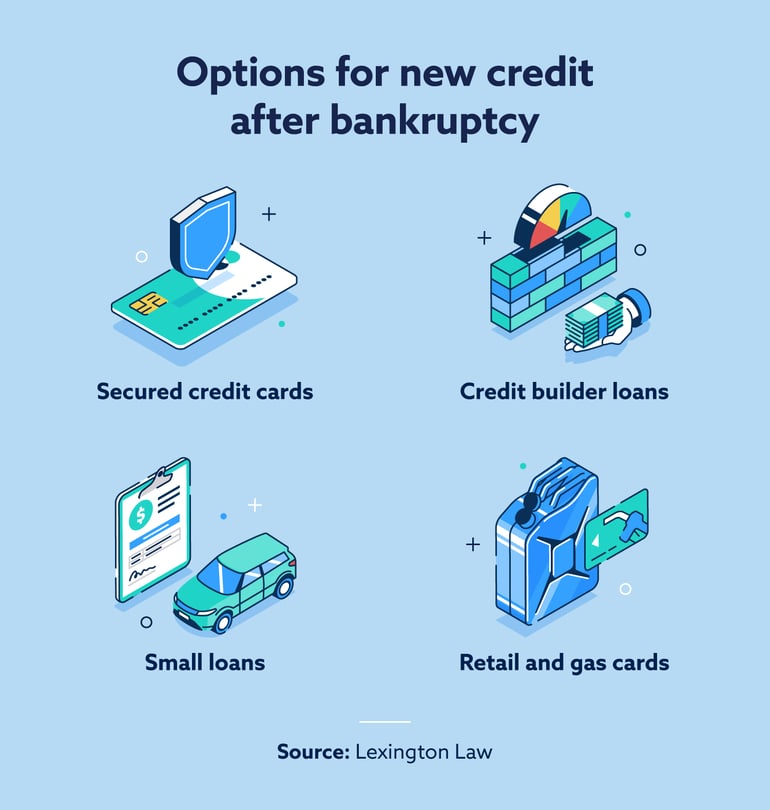
Securing new credit after bankruptcy can demonstrate financial responsibility if you properly manage your expenses. A Chapter 13 or Chapter 7 bankruptcy can result in higher interests, increased fees and less confident lenders.
However, it’s still possible to obtain new credit after a bankruptcy. Some of the most effective methods include:
With the cardholder’s permission, you can become an authorized user on another person’s credit card. While you’re piggybacking credit, you’ll share financial responsibility with the cardholder. Both of you will improve your credit by paying off card balances on time.
You will trigger a hard inquiry on your credit report every time you apply for new credit. Hard inquiries can appear on your credit report for up to two years and will briefly lower your credit score. But their impact is minor—one hard inquiry can typically only reduce your score by a few points at most.
Applying for too many credit cards within a small amount of time can hurt your score. It’s best to space out your applications by many months and only apply when you’re confident that you’ll be approved. When it comes to loans, credit scoring companies like FICO can sometimes lump multiple inquiries together if they occur within a window of 14 to 45 days.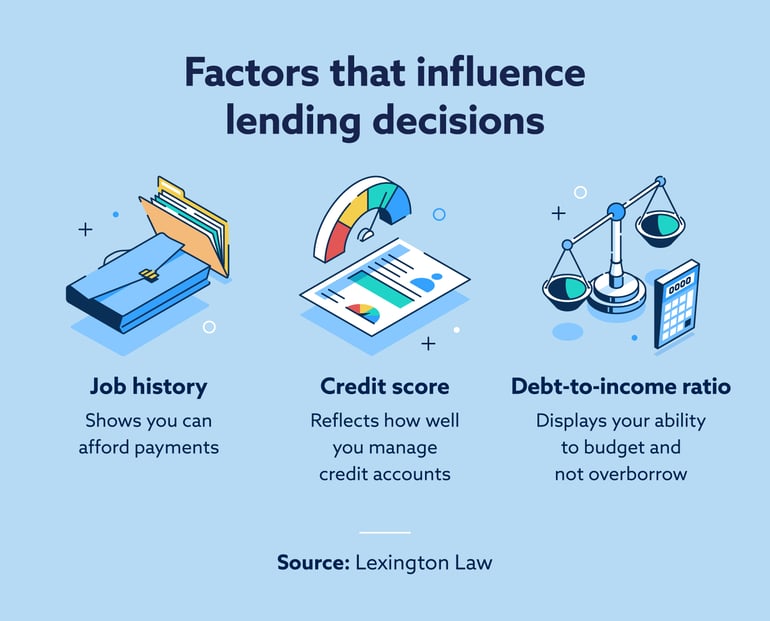
You can get credit for your rent payments with the three major credit bureaus (Equifax, Experian and TransUnion) if you utilize a rent reporting service.
In fact, you can get credit for various types of alternative credit data, which includes:
A cosigner can significantly increase your chances of applying for loans, credit cards and even properties like apartments. Lenders will look at your credit history and your cosigner’s when deciding whether to approve or reject your application. A cosigner with a good credit score can make up for your decreased score post-bankruptcy.
Bankruptcies can significantly hurt your credit, affecting people with higher credit scores more severely. Review your free credit reports after bankruptcy and challenge any incorrect information.
Bankruptcies should only appear on your report for up to 10 years (for Chapter 7) or up to seven (for Chapter 13). If you see a misreported bankruptcy on your report, it’s important to try to get it removed as soon as possible.
Bankruptcies can significantly hurt your credit, so it’s crucial to address any inaccurate negative items on your credit reports. Lexington Law Firm has extensive experience with challenging credit reporting errors. Our services can detect discrepancies on your reports and contact the major credit reporting bureaus on your behalf.
Bankruptcies can have a lasting impact on your credit, and recovering is a complex process. Here are some of the most common questions we’ve encountered about rebuilding your credit post-bankruptcy.
You can generally only have a bankruptcy removed from your report if it was reported in error. One of the reasons why the filing process is so extensive is to limit the possibility of reporting errors.
If you fail to address inaccuracies in your report, the only way to remove bankruptcy is to wait seven to 10 years for it to naturally drop off.
Yes, filing for a Chapter 7 bankruptcy will increase the difficulty of securing a loan, but it’s not impossible. Certain lenders offer unique post-discharge loans for qualifying borrowers, though these offers might have higher-than-average interest rates and fees.
Focusing on making your payments is vital to rebuilding your credit after bankruptcy because payment history makes up 35 percent of your FICO score. If you prioritize paying your debts on time and in full, you can steadily restore your creditworthiness.
However, be careful not to pay off your personal loans too early, since credit mix and credit age also contribute to your credit health. If a personal loan is your oldest credit account, paying it off too soon could accidentally lower your score.