
How many credit cards should I have?
October 13, 2025

The information provided on this website does not, and is not intended to, act as legal, financial or credit advice. See Lexington Law’s editorial disclosure for more information.
Have you ever wondered how your credit limit stacks up compared to the rest of the country? Recent data from Experian® found that the average credit limit for Americans is about $28,930, with Baby Boomers having the highest average credit limit at $40,318. Now, you may wonder how to increase your credit limit to get closer to the average, but raising your limit isn’t for everyone.
A credit limit increase can help you build your credit, but it can also increase your debt. To take advantage of the increase, it’s helpful to know the dos and don’ts of raising your credit limit.
In this post, you’ll learn how to increase your max credit limit and gain some helpful tips to work on your score and keep you out of too much debt.
Your credit limit is determined by various factors such as your credit history, current amount of available credit, income, and other factors relating to your finances. If it’s your first credit card, the primary factors will be your credit score and income. It’s also helpful to remember that each card issuer is different and may make their credit limit decisions in their own way.
If you’re just getting started with building credit or trying to repair your credit, you may want to start with a secured credit card. With a secured credit card, you build credit by using your own money. When you make your initial deposit, that amount becomes your credit limit.
Your credit limit on a given card determines how much money you can charge to that particular card. In addition to allowing you to borrow more money, this can have an impact on your total available credit, which can also affect your credit health.
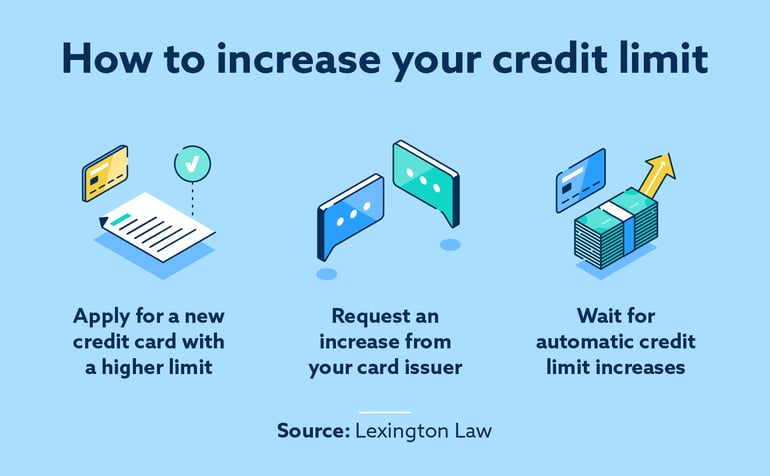
If you’re looking to get a higher credit line, you have the following three options:
In addition to these methods, you can also accept a new credit card offer from a different credit card issuer. As you continue to build your credit, you may receive additional offers from new companies.
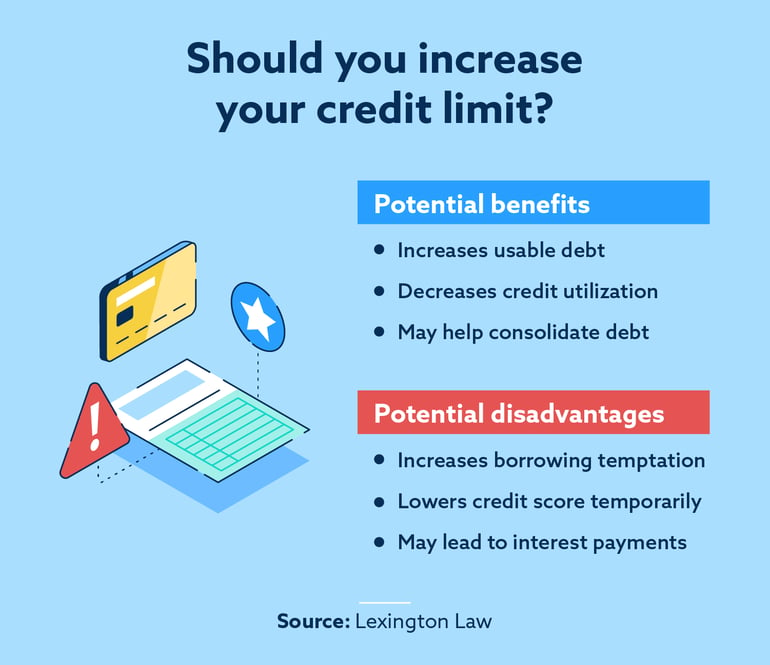
Once you receive a credit line increase, you may not recognize the benefits right away, but there are some advantages to raising your limit. The following are some of the biggest benefits:
Before requesting an increase, it’s also helpful to understand the potential disadvantages of increasing your credit limit:
If you decide to request an increase to your credit limit, the best way to do this is by going through your card issuer. It’s a fairly simple process and sometimes, you can do it online.
Should your credit limit increase result in a denial, don’t worry. While it may not be the result you hoped for, you’ll have an opportunity to request one in the future. When you’re denied, your credit card issuer will often send you something in the mail that lists the reasons for the denial.
Some of these reasons may include:
As mentioned in the steps to getting a credit limit increase, it’s helpful to ensure that you have a good reason for requesting the increase. If you simply want a credit limit increase to purchase items that you don’t necessarily need and will put you further in debt, you may want to reconsider the increase.
An increase to your credit limit should ideally align with your long-term financial goals. Whether it’s improving your credit, decreasing your utilization ratio or simply giving you some peace of mind in case of emergencies, these may be good reasons to get an increase.
The following are some of the common questions people have when they’re thinking about increasing their credit limit.
A credit limit increase can affect your credit score positively or negatively, but some of this is in your control. Once you have the increase, if you pay on time and keep your utilization low, it can improve your credit over time.
If you go over your credit limit, the purchase may not go through. If the payment does go through, you may have to pay additional fees. It may also hurt your credit score. Fortunately, the Credit CARD Act of 2009 ensures you can’t be charged overage fees without your permission.
There’s no set answer for what a good credit limit is because it can differ for each person. Ideally, a good credit limit provides you with enough funds to live comfortably while also being able to maintain a good credit utilization ratio.
Now that you better understand credit limit increases, you know that it’s important to know your credit score before applying. If you apply for an increase with poor credit, you’re more likely to get denied.
Fortunately, here at Lexington Law Firm, we offer a free credit assessment that you can sign up for today. This allows you to check your credit health before applying for a credit increase or a new line of credit. If you have inaccuracies on your credit report, you can sign up to become a client, and we’ll challenge the errors on your behalf.