
How many credit cards should I have?
October 13, 2025

The average 18- to 25-year-old had a credit score of 680 in 2023, which is considered “good” in the FICO® credit scoring system. Many people typically start building credit around this age range. A healthy credit score can be a significant, helpful influence on finances in the future, especially for future applications for mortgages, auto loans and credit cards.
A credit score is established when you take an action that will be reported to a credit bureau—like applying for a loan or credit card. (Just applying can affect your score, even if you aren’t approved.) After a few weeks, your first credit score will be generated based on your actions.
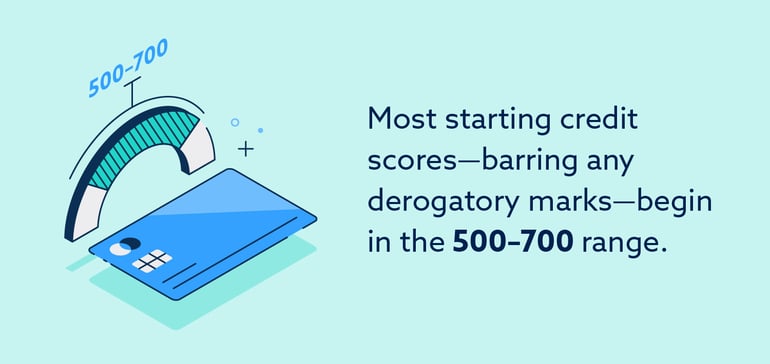
FICO® and VantageScore® are the two most common scoring models, and both have credit score ranges of 300 to 850. It’s likely that you will start out with a slightly lower credit score – anywhere from 500 – 700 points. You can increase the chances of starting with a higher score by taking specific actions, such as:
A credit card is a common first step in establishing a credit score. However, you don’t need a credit card to start building your credit history—other options are available.
Here’s how to build credit without a credit card:
You won’t automatically receive a credit score when you turn 18. You don’t receive a credit score until you apply for a line of credit, or report your behavior to the credit bureaus. In fact, many adults don’t have a credit score because they’ve never applied for credit. This is known as being “credit invisible.”
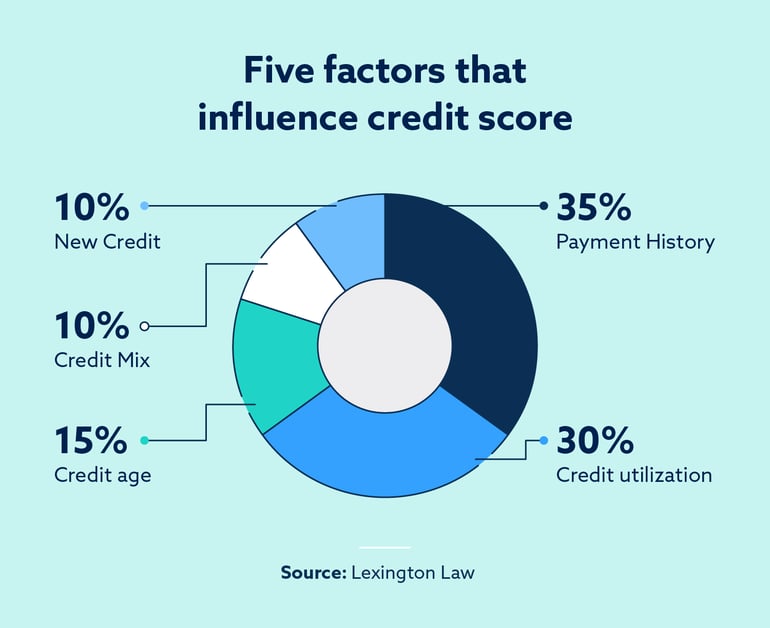
Five main factors affect your credit score: new credit, credit mix, length of credit history, amounts owed and payment history.
ome factors carry more weight than others, but all of them are important to building credit.
This is the breakdown for the FICO® scoring model, from least influential to most:
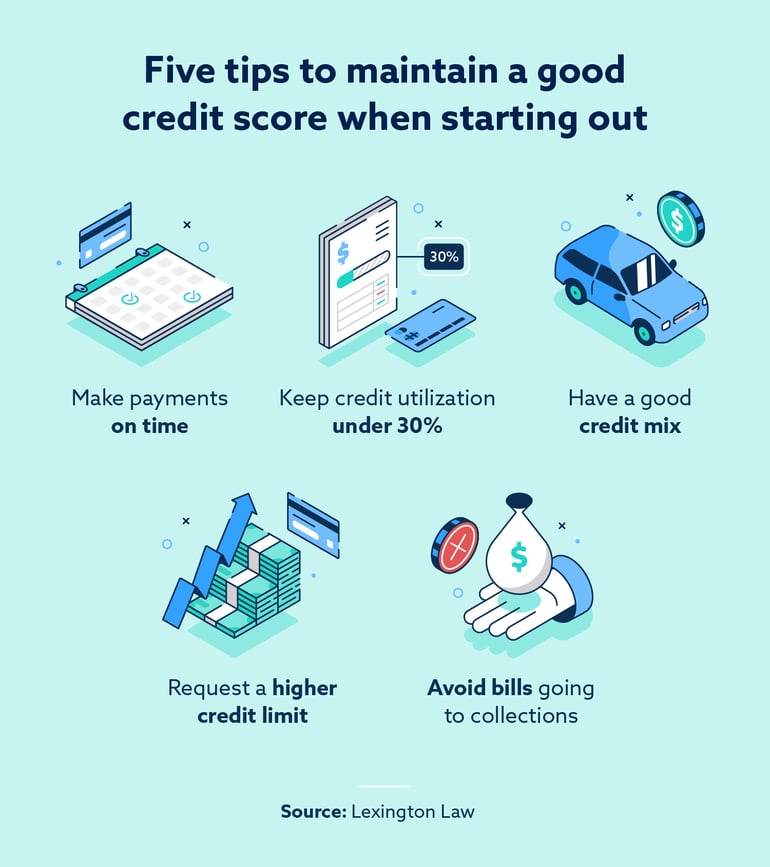
Credit utilization and payment history have significant impacts, and you have the most control over them. Ideally, you’ll want to keep your credit utilization under 30%. For example, if you have a max credit limit of $1,000, you’ll want to keep your monthly balance under $300.
As for payment history, try to pay on time or pay within the grace period if you’re late.
Doing these two things, as well as limiting new credit applications, having a good mix of credit and starting your credit history as soon as possible, can help you increase your credit score.
Credit scoring models (like FICO or VantageScore) require you to have at least one credit account (e.g., a credit card, loan, or another form of credit) reported to the bureaus before generating a score. Most scoring models also require at least 3-6 months of account activity to establish a credit history.
During those first few months, your payment history, credit utilization (how much of your credit limit you’re using), and the length of your credit history start to build up. These factors contribute to your score once enough data has been collected.
When you start, it’s likely that your credit score won’t be very high. It takes time to gain an excellent credit score, and when you’re just starting out you don’t have a long history of credit to show you’re a reliable borrower.
850 or higher is considered a “perfect” score. This type of score takes time to achieve because credit age isn’t something you can speed up. Reports show only 1.54% of people in 2023 had this score, so it’s quite an accomplishment for anyone.
Getting a credit score is one thing, building it and protecting it is another – especially when you’re just starting out. Here’s what you should keep in mind:
If you’re concerned about starting out with a low score, just know that it’s a normal part of the credit journey – everyone has to start somewhere. If you’re wondering what your credit score looks like, you can check today for free with a credit assessment.