
How to Use Your Tax Refund to Build Better Credit
February 27, 2026

The information provided on this website does not, and is not intended to, act as legal, financial or credit advice. See Lexington Law’s editorial disclosure for more information.
If you’re overwhelmed and stressed about credit card debt, know you’re not alone. A recent report found that almost half (49 percent) of credit card holders carry a balance from month to month. But with the average interest rate on a credit card a shocking 27.91 percent, having a balance is simply an unwise financial decision.
Luckily, if you commit and work hard, you may be able to get out of credit card debt fast.
With a structured repayment plan and the dedication to follow through with it, you can also become debt-free—even if you’ve damaged your credit along the way. There’s no single approach to paying off credit card debt, but this guide outlines eight practical strategies to help you get debt-free as quickly as possible.
Paying more than the minimum amount due is the key to paying off credit card debt. If you overpay your credit card balance, you can cut down your repayment time and, consequently, the total payment amount.
The longer it takes to pay off a credit card, the more you’ll pay in interest over that time. Those interest payments are funds that could go toward other bills, your savings or even other credit cards.
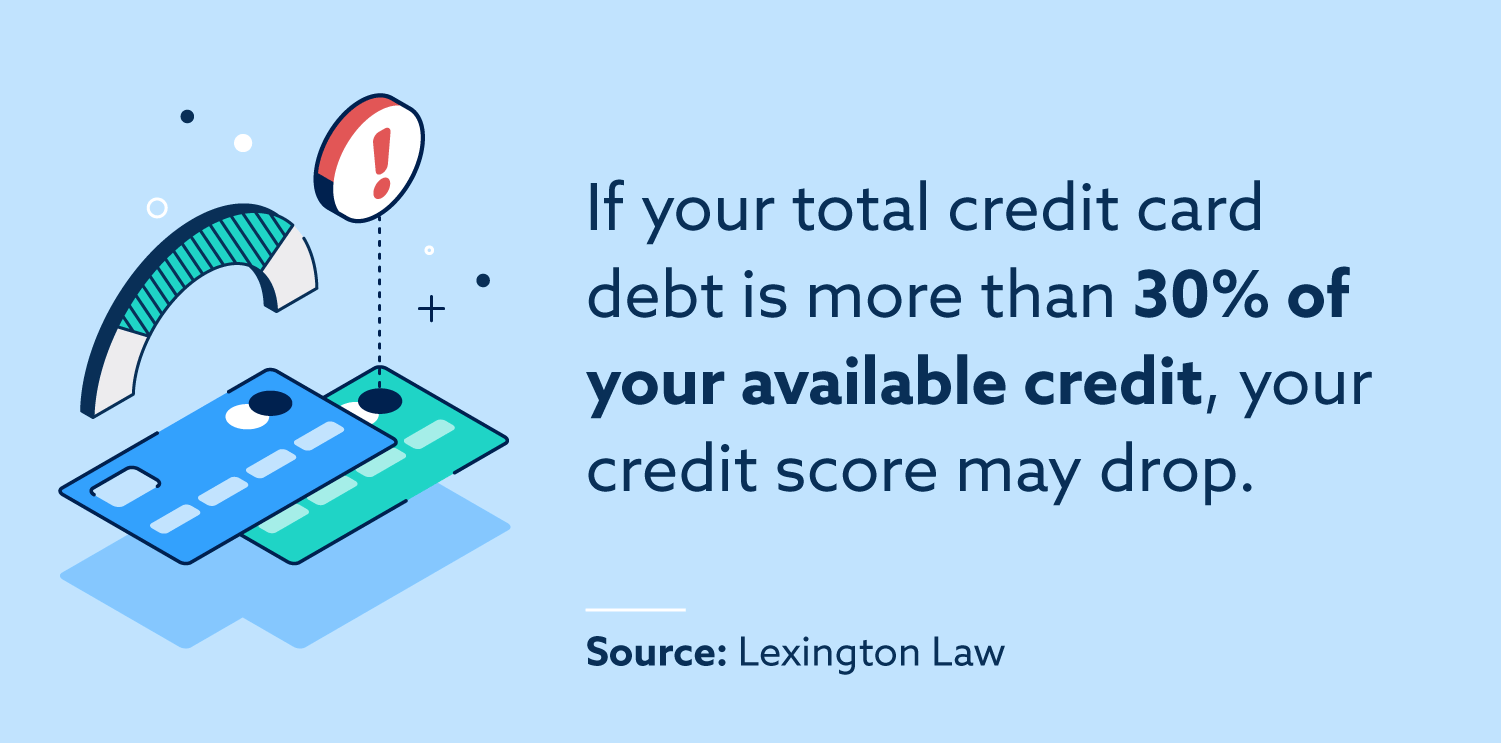
Another benefit of reducing credit card debt is lowering your credit utilization ratio. This is the percentage of the total revolving balances you owe (usually on credit cards) compared to your total credit limit. Your credit utilization ratio accounts for 30 percent of your credit score, and typically, you want to keep your ratio below 30 percent to avoid a significant negative impact on your credit.
Quick tip: Calculate how much more than the minimum payment you can afford each month and budget for it.
If you have multiple debts and the idea of becoming debt-free feels impossible, it can help to start small with achievable goals. Here are two strategies to consider when deciding how to prioritize your debts.
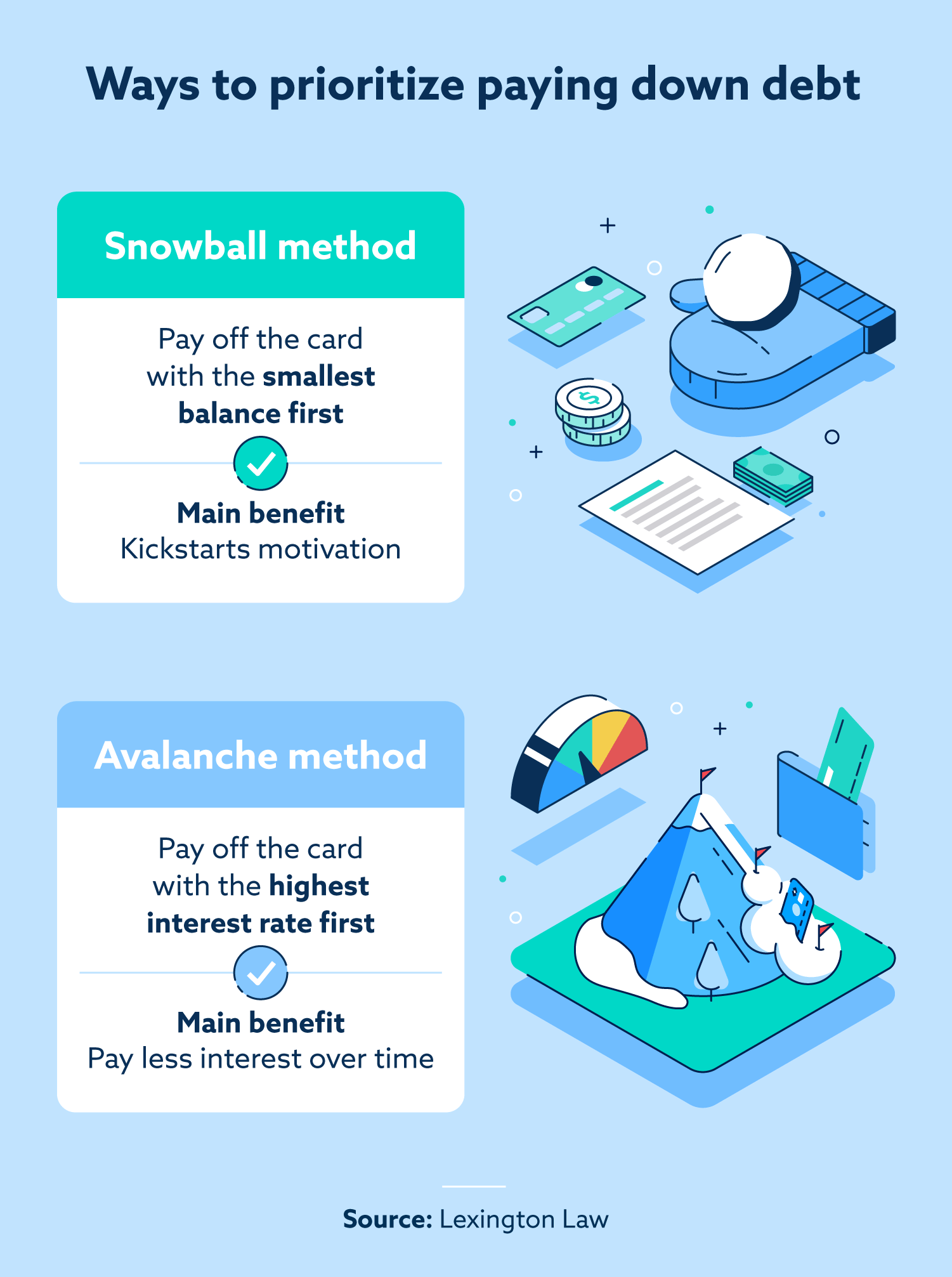
Also referred to as the snowball method, the idea behind this approach is to dedicate the most money every month to the card you can pay off the fastest. The benefits of this approach are:
The avalanche method prioritizes the card with the highest interest rate, regardless of the balance.
The benefits of this approach are:
Quick tip: After paying off the first card, apply the money you were paying on that card to the one with the next-lowest balance to pay it off even faster.
Average credit card interest rates are incredibly high, which can be a major hurdle to getting out of debt. Lowering your rate could save you money every month as you continue making payments. Here’s how you can ask for a lower interest rate.
Quick tip: Use the money you save on interest every month to pay the card off faster.
Negotiating debt with your issuer could potentially help you pay off your balances through options including:
During your phone call, ensure you fully understand any implications to your total debt, payment terms and credit before agreeing to anything.
You may benefit from using a personal loan to pay off credit card debt if the interest rate and repayment terms are more favorable than those on your credit cards. A personal debt consolidation loan offers two potential benefits:
Remember, extra fees (such as an origination fee) may be associated with a personal loan.
Quick tip: You won’t be able to pay less than your agreed-upon monthly payment amount, but you can overpay to save on interest over the course of the loan.
Another way to consolidate credit card debt is through balance transfer credit cards. A balance transfer allows you to move the debt of one card over to another. These cards often have periods of low or even zero APR, which gives you a set amount of time to pay off your balance free of interest.
As with every type of card, you should always read the terms carefully. If you carry a balance or miss payments after the promotional period, you may find yourself paying even higher interest rates or late fees.
Quick tip: To reduce the risk of increasing your overall debt, try to avoid using your balance transfer card to make additional purchases.
Before you start working toward paying off credit card debt, you may want to create an emergency fund. While making minimum payments on your debt, focus on building your savings. That way, you can avoid putting unexpected expenses on a credit card in the future.
Although we’ve outlined some of the best methods to pay off credit card debt fast, there are still many questions credit card owners have related to their debt. We’ve answered a few of the most frequently asked questions regarding credit card debt below.
If you can afford to pay off your credit card debt all at once, this will be the best option to avoid paying additional interest.
While you may have to go at a slower pace, you can pay off debt even if you live paycheck to paycheck. Be sure to follow a strict budget and put any extra money you have at the end of the month toward paying off your debt.
After you’ve paid off your credit cards, you’ll want to avoid acquiring more debt. There are a few best practices you can follow:
Carrying a credit card balance can have a direct impact on your credit. In fact, as we mentioned earlier, your utilization ratio accounts for 30 percent of your FICO® credit score.
In addition, if your credit card debt prevents you from making payments on time, this could significantly harm your credit because payment history accounts for 35 percent of your FICO credit score.
Carrying a lot of credit card debt can hurt your credit and potentially your ability to get approved for new credit cards, loans and higher credit limits.
There’s no one best solution for paying off credit card debt. Your income, credit history, monthly expenses and number of credit cards all factor into your unique situation.
Additionally, factors like your credit score, level of debt and potential volatility in available funds can affect which of these methods is viable for you. Remember, the credit repair team at Lexington Law Firm is prepared to help you work on your credit so you can be better positioned to get out of credit card debt and save money.