
How many credit cards should I have?
October 13, 2025

The information provided on this website does not, and is not intended to, act as legal, financial or credit advice. See Lexington Law’s editorial disclosure for more information.
Key takeaways:
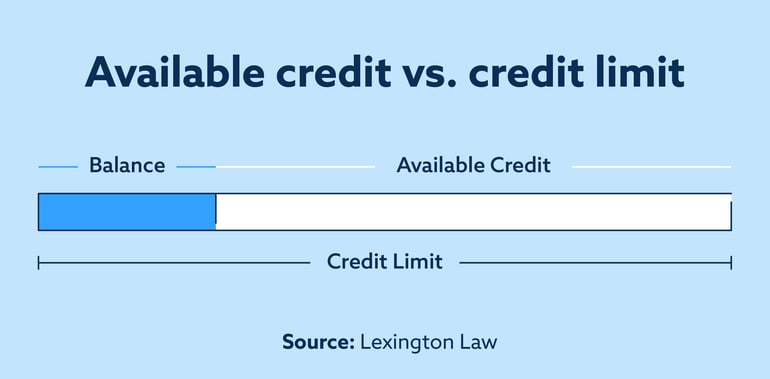
Your available credit and credit limit are two closely related terms with different functions. Available credit is the amount of money on your credit card you can currently spend, while your credit limit is the total borrowing limit set by your bank. So, for example, you might have a total credit limit of $5,000, but if yesterday you spent $400, you only have $4,600 of available credit today.
Banks use factors like credit scores and other financial information when they set credit limits for cardholders. If you develop a positive relationship with a bank, it might automatically increase your credit limit over time.
Again, available credit refers to the funds you can access now, while your current balance reflects the funds you’ve already used. In fact, you can subtract your current balance from your credit limit to know what your available credit is. So, in the example used above, your current balance would be $400.
Your current balance also includes pending transactions that haven’t cleared into account. This helps to prevent cardholders from overborrowing while transactions are getting logged in.
Generally speaking, you shouldn’t borrow more money than you can afford to repay before your billing cycle ends. Interest only affects you when you carry a balance each period. The more you repay, the less interest you’ll have to worry about.
Yes, you can increase your available credit by simply managing your funds responsibly and by proactively taking certain actions:
Double-checking your available credit can help you stay within your limit and prevent hits to your credit score. You have plenty of options for checking available credit, from using a credit card payoff calculator to calling your financial institution.
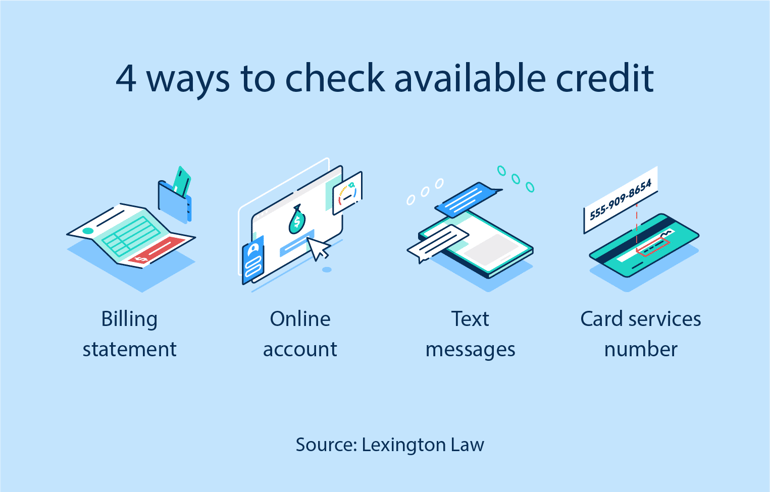
You should always keep your paper and electronic billing statements on hand as they can outline your available credit and transaction history. Any purchases or payments you make after your billing cycle ends won’t be included in the billing statement, so this method isn’t always the most up to date.
Online banking accounts provide info on your available credit, purchase history and pending transactions. Most institutions let you check your information on their websites, and they offer mobile banking apps that receive frequent updates.
Your financial institution might let you opt in for text message updates on your account. This helpful alternative is useful when a strong internet connection isn’t available.
You can always call the card services number on the back of your credit card when you’re curious about your available credit. Many institutions use automated receptionists for common questions before transferring you to a live representative.
Your credit score helps lenders assess your financial responsibility and likelihood of repaying debts. If you struggle to make timely payments or frequently borrow too much money, your credit limit will decrease—which poses a risk to your credit health.
Credit utilization compares your current balances to your total credit limit. If you have a $1,000 credit limit and a current balance of $500, your utilization rate will be 50 percent. Keeping your utilization below 30 percent is a great way to avoid a limit reduction and maintain or improve your credit.
It can take three to seven business days for available credit to update after you make a payment. Financial institutions have to ensure that the payment went through and that the amount they’re charging you is accurate.
You can still use your credit card after you make a payment, but be careful not to accidentally exceed your balance. For example, if you have a $1,000 credit limit with a $500 current balance, using your card to make a $505 purchase will exceed your limit.
Managing your accounts and available balances is a great way to start improving your credit. You’ll likely get into the groove of using your credit sparingly and paying off debts quickly. However, credit card transactions aren’t the only items that appear on your credit report.
It’s best to check your credit score and report regularly. If you find any derogatory marks that shouldn’t be there, Lexington Law Firm could help you challenge these errors. Check out our services, which include contacting the credit bureaus on your behalf, today.